Trademark Registration Process in India (2026 Updated Guide)
Registering a trademark in India is no longer optional if you are serious about building a brand. Whether you are a startup founder, a D2C seller, a professional, or a growing business, trademark registration protects your brand identity and gives you legal ownership over your name or logo.
This guide explains the trademark registration process in India, updated for 2026, in a simple and practical manner.
What Is a Trademark?
A trademark is a distinctive sign that identifies your brand. It can be:
- A word or brand name
- A logo or symbol
- A tagline
- A combination of words and design
- Even sounds or colours (in specific cases)
Once registered, a trademark gives you exclusive rights to use the mark for the goods or services it is registered under.
Why Trademark Registration Is Important
Trademark registration helps you:
- Protect your brand from imitation
- Take legal action against misuse
- Build trust with customers
- Create a valuable business asset
- License or sell your brand in the future
Without registration, your rights are limited and difficult to enforce.
Who Can Apply for Trademark Registration?
Any of the following can apply:
- Individual or sole proprietor
- Startup or MSME
- Partnership firm
- Private limited or LLP
- Trust or society
- Foreign entity doing business in India
You do not need a registered company to apply for a trademark. Trademark can be acquired in a personal capacity!
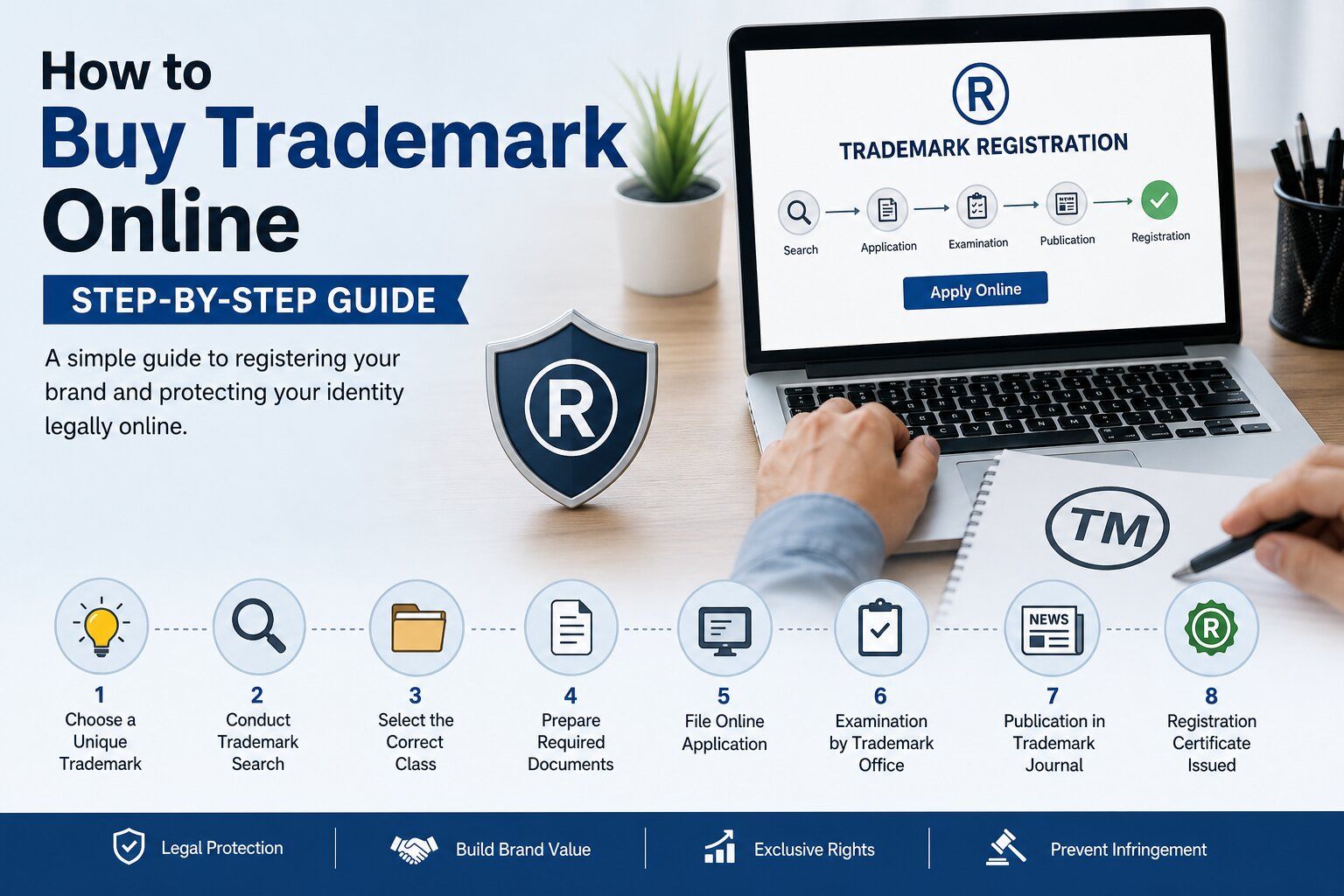
Step-by-Step Trademark Registration Process in India
Step 1: Trademark Search
Before filing an application, it is important to check whether a similar or identical trademark already exists.
A trademark search helps you:
- Avoid rejection
- Reduce objections and opposition
- Choose a stronger brand name
The search should include:
- Exact matches
- Phonetically similar names
- Visually similar marks
Step 2: Identify the Correct Trademark Class
India follows the Nice Classification, which has 45 classes:
- Classes 1–34: Goods
- Classes 35–45: Services
Choosing the correct class is critical. Filing under the wrong class can make your trademark useless for protection.
Step 3: Prepare the Trademark Application
The trademark application includes:
- Applicant details
- Trademark name or logo
- Trademark class
- Description of goods/services
- Date of first use (if applicable)
If you are using a logo, it must be uploaded in the prescribed format.
Step 4: File Trademark Application (Form TM-A)
The application is filed online with the Trademark Registry.
Once filed:
- You receive an application number
- You can start using the ™ symbol
At this stage, your trademark is considered “applied for”.
Step 5: Examination by Trademark Office
The trademark examiner reviews the application to check:
- Legal compliance
- Similarity with existing trademarks
- Distinctiveness of the mark
This usually takes 1–3 months.
Step 6: Trademark Examination Report
The examiner may:
- Accept the trademark, or
- Raise objections
Common reasons for objections include:
- Similar existing trademarks
- Descriptive or generic names
- Lack of distinctiveness
Step 7: Reply to Trademark Objection (If Any)
If objections are raised, a reply must be filed within 30 days.
A proper reply should:
- Address legal grounds
- Include precedents if needed
- Clearly justify registrability
If the reply is accepted, the application moves forward.
Step 8: Trademark Publication in Journal
Once accepted, the trademark is published in the Trademark Journal.
This allows third parties to oppose the registration if they believe it conflicts with their rights.
The opposition period is 4 months.
Step 9: Opposition Proceedings (If Any)
If an opposition is filed:
- Both parties submit arguments and evidence
- Hearings may be conducted
- The Registrar decides the outcome
If no opposition is filed, the application proceeds automatically.
Step 10: Trademark Registration Certificate
If the application clears all stages, the Trademark Registry issues a Registration Certificate.
- You can now use the ® symbol
- The trademark is valid for 10 years
- It can be renewed indefinitely every 10 years
How Long Does Trademark Registration Take?
On average:
- Without objections or opposition: 6–10 months
- With objections or opposition: 12–24 months
However, protection starts from the application date, not the registration date.
Trademark Registration Fees in India
Government fees depend on applicant type:
- Individuals / Startups / MSMEs: Lower fee
- Companies and others: Standard fee
Professional charges vary based on:
- Search complexity
- Objection handling
- Opposition proceedings
Common Mistakes to Avoid
- Skipping trademark search
- Choosing a weak or descriptive name
- Selecting the wrong class
- Ignoring objection deadlines
- Filing without professional review
These mistakes often lead to rejection or future disputes.
Wordmark vs Logo Trademark
- Wordmark protects the brand name in all styles
- Logo trademark protects a specific design
For long-term protection, many businesses register both.
Frequently Asked Questions
Can I use my trademark before registration?
Yes. You can use the ™ symbol once the application is filed.
Is trademark registration mandatory?
It is not mandatory, but highly recommended for legal protection.
Can I register a trademark myself?
Yes, but professional assistance reduces risks of rejection and objection.
Does trademark registration protect my domain name?
No, but it helps you take action if someone misuses your brand online.
Final Thoughts
Trademark registration is a strategic step, not just a legal formality. A properly registered trademark protects your brand, builds credibility, and supports long-term business growth.
If you are serious about your brand, registering your trademark early is one of the smartest decisions you can make.