If you've just registered an LLC for your new business, you might assume your business name is locked down and protected. It isn't — at least not in the way most founders think. An LLC and a trademark do two very different jobs, and mixing them up is one of the most common (and costly) mistakes small business owners make.
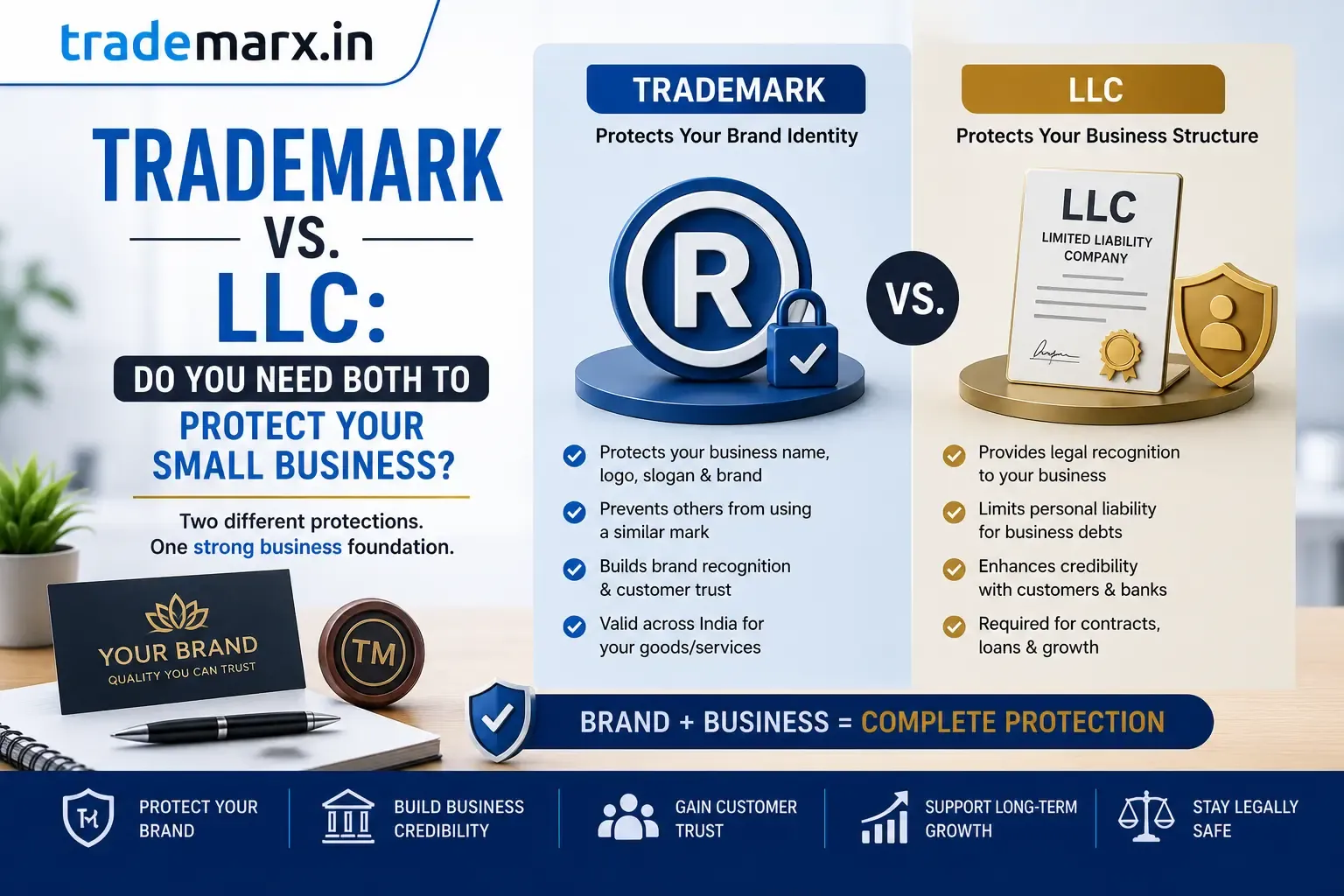
Here's the short version: an LLC protects you. A trademark protects your brand. Many businesses eventually need both. Let's break down what each one actually does, how they interact, and how to figure out what your business needs right now.
What an LLC Actually Protects
When you form a Limited Liability Company (LLC) with your state, you're doing two things: creating a legal entity that's separate from you personally, and reserving your business name within that state.
That second part is where the confusion starts. Registering "Bright Leaf Coffee Co., LLC" with your state's Secretary of State office means no one else can form another LLC with that exact name in that state. It does not mean:
- You own the name "Bright Leaf Coffee" as a brand
- You can stop a competitor in another state from using a similar name
- You can stop someone from using a similar name for a different but related business (say, a clothing line called "Bright Leaf")
- You have any rights to your logo, tagline, or product names
In short, an LLC is an administrative and liability shield. It keeps your personal assets — your house, your car, your savings — separate from your business debts and lawsuits. It was never designed to protect branding.
What a Trademark Actually Protects
A trademark protects the words, logos, slogans, or symbols that identify your goods or services in the marketplace. Its purpose is to prevent customer confusion — to stop another business from using a name or logo so similar to yours that customers might think they're buying from you.
In the United States, you actually get some trademark rights automatically just by using a name in commerce ("common law" rights), but those rights are limited to the geographic area where you operate and can be hard to enforce.
A federal trademark registration through the U.S. Patent and Trademark Office (USPTO) gives you:
- Nationwide rights to use the mark for your specific goods/services categories
- A legal presumption of ownership if a dispute arises
- The ability to use the ® symbol
- The right to bring a federal lawsuit and pursue stronger damages against infringers
- A public record that can deter competitors from choosing a similar name in the first place
If your LLC name, product name, or logo is core to how customers recognize your business, that's the asset a trademark protects — and an LLC filing does nothing for it.
So Which One Do You Need First?
There's no universal answer, but here's a practical way to think about it:
Form the LLC first if: you're actively operating, taking on clients, signing contracts, or exposed to any liability. Liability protection is time-sensitive — you want it in place before anything goes wrong, not after.
Prioritize the trademark early if: your brand name is central to your business model, you're in a competitive or crowded market, or you're planning to expand regionally or nationally soon. Trademark rights are generally first-come, first-served, so waiting too long can mean someone else locks up a name close to yours.
One important wrinkle: if you plan to have your LLC own the trademark (which is typical), the LLC generally needs to exist before — or at the same time as — you file the trademark application, since the legal owner of the mark is who applies.
The practical reality for most small businesses: form the LLC reasonably early for liability protection, but don't treat that as "done" on the branding front. Plan to file for a trademark once you've settled on a name you intend to keep long-term.
A Simple Action Plan
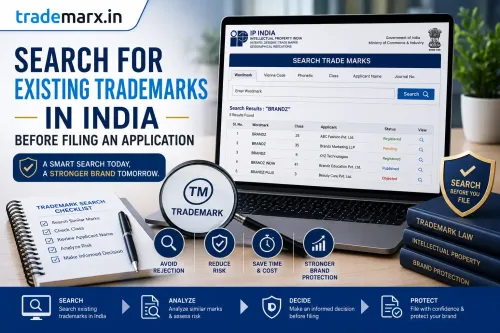
- Search before you commit. Before forming an LLC or launching a brand, search your state's business name database and the USPTO's trademark database (TESS) for conflicts. A name can be available as an LLC but still infringe on someone else's trademark.
- Form your LLC to get liability protection and a registered business name in your state.
- File a federal trademark application for your business name, logo, or product names once you're confident in the brand and using it (or about to use it) in commerce. As of 2026, the USPTO's base filing fee is $350 per class of goods/services.
- Expect a process, not an instant result. Trademark applications typically take roughly 12–18 months from filing to registration, even when everything goes smoothly, because of mandatory review and publication periods.
- Revisit both as you grow. If you expand into new states, new product lines, or new markets, both your LLC structure and your trademark filings may need updating.
FAQ
Does forming an LLC automatically give me a trademark on my business name? No. An LLC registration only reserves your exact business name within your state for entity-formation purposes. It doesn't grant any rights to use that name as a brand, doesn't cover logos or product names, and doesn't stop businesses in other states or industries from using a similar name.
Can I trademark my business name if I haven't formed an LLC yet? Yes, individuals (sole proprietors) can file trademark applications. However, if you intend for your LLC to own and use the mark, most attorneys recommend forming the LLC first (or simultaneously) so the correct legal entity is listed as the owner on the application.
How long does it take to get a registered trademark? Current USPTO timelines run roughly 12 to 18 months from filing to registration under normal circumstances, and longer — sometimes 18–24+ months — if the application receives an office action (a formal objection or request for changes) or faces an opposition. Choosing a distinctive name and filing a clean, accurate application helps avoid delays.
What does it cost to file a trademark? As of 2026, the USPTO's base application fee is $350 per class of goods or services, with possible small surcharges for incomplete applications or non-standard product/service descriptions. Most straightforward applications only pay the base fee. This is the government filing fee only — attorney fees, if you use one, are separate.
The Bottom Line
An LLC and a trademark aren't competing options — they're complementary tools that protect different things. Your LLC shields your personal assets and gives your business a legal identity. Your trademark protects the name and brand customers associate with you, nationwide. If your business name matters to your bottom line (and for most businesses, it does), don't stop at the LLC. Run a trademark search on your name now, and if it's clear, consider starting the federal application process — the sooner you file, the stronger your claim to the name.
This article is for general informational purposes only and is not legal advice. For guidance specific to your business, consult a licensed attorney.