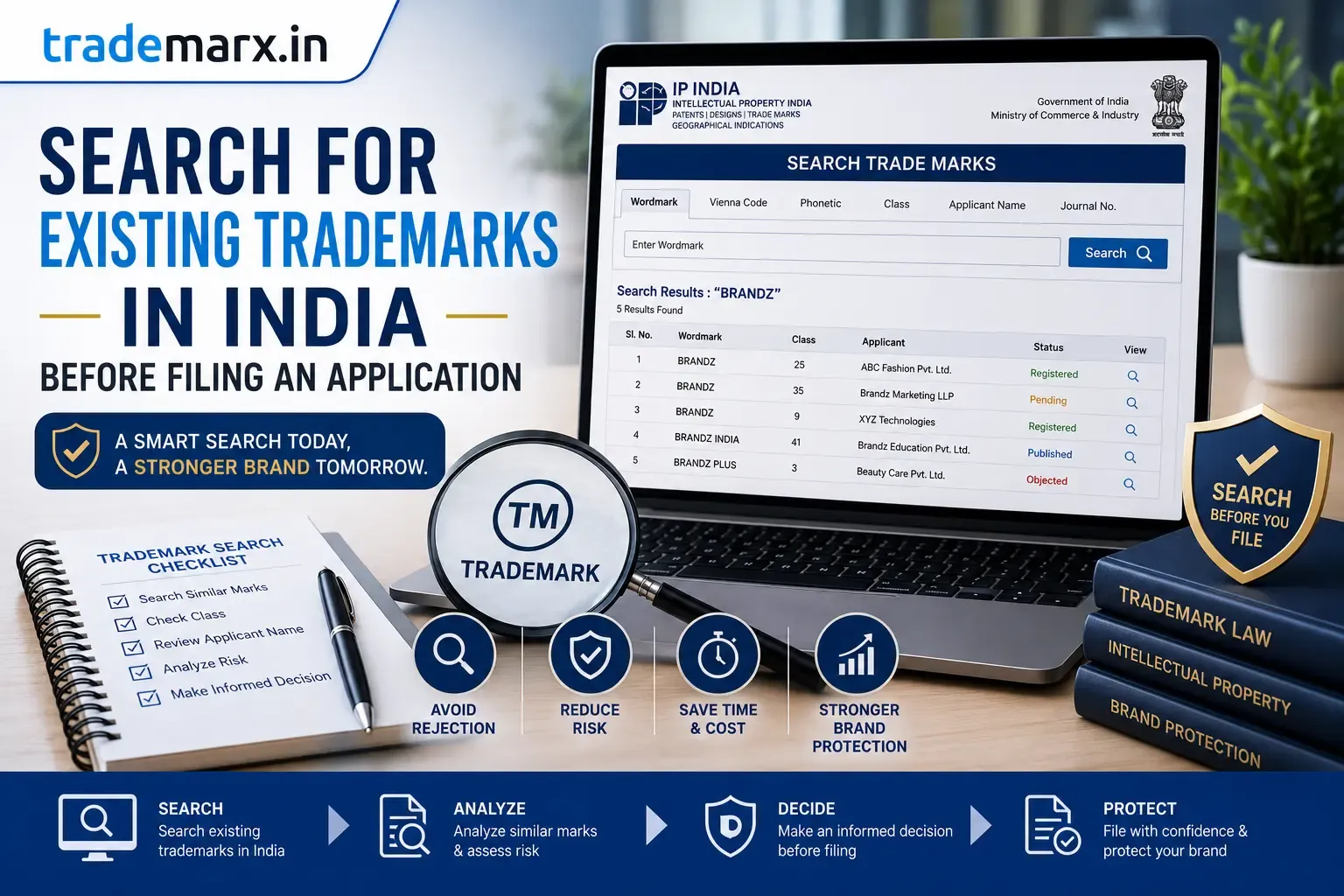
Before filing a trademark application in India, it is extremely important to search for existing trademarks to check whether a similar or identical mark has already been applied for or registered. A proper trademark search helps reduce the chances of objections, oppositions, legal disputes, and rejection of the application. It also gives businesses a clearer understanding of whether their brand name is actually available for registration and use.
A trademark may appear unique to a business owner, but there may already be similar marks registered in the same industry or class. Filing without conducting a trademark search can result in wasted government fees, delays, and branding complications later. That is why trademark professionals strongly recommend conducting a detailed trademark availability search before investing in branding, packaging, websites, or marketing.
What Is a Trademark Search?
A trademark search is the process of checking existing trademark records to identify marks that may conflict with your proposed brand name, logo, slogan, or device mark. In India, this search is generally conducted through the records maintained by the Trademark Registry under the Controller General of Patents, Designs and Trade Marks.
The objective of the search is not only to identify exact matches but also to identify deceptively similar trademarks. Even if another trademark is not identical, the Registrar may still object if the marks sound similar, look similar, or create confusion among consumers.
For example, a business planning to register a brand like “QuickBite” may face issues if marks such as “Kwik Bite” or “Quick Byte” already exist in similar categories. Trademark law focuses heavily on the likelihood of confusion.
Why Trademark Search Is Important Before Filing
Trademark registration involves both time and money. Once the government filing fee is paid, it is generally non-refundable. Conducting a proper search beforehand minimizes the risk of filing an application that is likely to face objections.
A trademark search also helps businesses:
- Avoid infringement issues
- Reduce the possibility of legal notices
- Prevent brand conflicts in the future
- Save branding and marketing costs
- Improve chances of successful registration
In many cases, startups spend heavily on logos, websites, packaging, social media handles, and advertisements before checking trademark availability. If a conflict is later discovered, the entire branding exercise may need to be changed.
Understanding Similar Trademarks
Many people believe that only identical trademarks can create problems, but trademark law in India also protects against deceptively similar marks.
Similarity may arise in multiple ways:
- Phonetic similarity
- Visual similarity
- Conceptual similarity
- Structural similarity
Words that sound alike can still create confusion even if the spelling differs. For example:
- “Xpress” and “Express”
- “Lite” and “Light”
- “Kwality” and “Quality”
The Trademark Registry examines whether consumers may mistakenly assume that two brands are connected.
This is one of the main reasons why trademark searches should go beyond exact keyword matching.
Trademark Classes and Their Importance
Trademark applications in India are filed under specific classes of goods and services. There are 45 trademark classes in total.
Classes 1 to 34 relate to goods, while classes 35 to 45 relate to services.
A trademark may be available in one class but unavailable in another. For example, the same brand name may coexist in unrelated industries if there is no likelihood of confusion.
Suppose a brand exists for clothing in Class 25. Another business may still be able to register a similar mark in a completely unrelated category such as software services, depending on the circumstances.
Therefore, selecting the correct trademark class is an essential part of the trademark search process.
How to Search Existing Trademarks in India
Trademark searches in India can be conducted through the official trademark database. The search process usually involves entering:
- Brand name
- Keyword variations
- Phonetic variations
- Trademark class
- Owner details (optional)
However, conducting a basic search alone may not always be sufficient. A professional search often includes:
- Exact match search
- Phonetic search
- Similarity analysis
- Prefix and suffix searches
- Device/logo analysis
- Cross-class conflict checks
Many applications face objections because applicants rely only on simple exact-match searches.
Types of Trademark Searches
Trademark searches are generally categorized into different types depending on the depth of analysis.
Wordmark Search
This checks whether similar words or brand names already exist in the trademark database.
Phonetic Search
This identifies trademarks that sound similar even if spelled differently. Phonetic conflicts are one of the most common reasons for trademark objections.
Logo or Device Search
If you are filing a logo trademark, image-based searches may also be necessary to identify visually similar device marks.
Comprehensive Search
A comprehensive trademark search combines all major search methods and provides a better risk assessment before filing.
Common Mistakes Businesses Make During Trademark Search
One of the biggest mistakes businesses make is searching only on Google or checking domain availability. A domain name being available does not mean the trademark is available.
Another common mistake is ignoring phonetic similarities. Many entrepreneurs search only for exact spellings and miss similar-sounding trademarks already registered.
Businesses also sometimes search in the wrong trademark class or overlook pending applications. Even pending trademark applications can create objections later.
Some businesses assume that changing one letter makes a trademark unique. In reality, slight spelling modifications may still be considered deceptively similar.
Can You File a Trademark Without Conducting a Search?
Technically, yes. A trademark application can be filed without conducting a prior search. However, doing so is highly risky.
Without a search, businesses may unknowingly file trademarks that conflict with existing marks. This can lead to:
- Examination objections
- Opposition proceedings
- Legal disputes
- Rebranding costs
- Loss of filing fees
A trademark search acts as a preventive step that reduces future complications.
Trademark Search and Examination Objections
The Trademark Registry examines all applications after filing. If the Examiner finds a similar mark already on record, an objection may be raised under the Trade Marks Act.
One of the most common objections relates to similarity with existing trademarks.
A prior trademark search helps identify potential conflicts before filing so businesses can:
- Modify the mark
- Choose a different class
- Add distinguishing elements
- Avoid high-risk applications
This improves the chances of smoother registration.
Should Startups Conduct Trademark Searches Early?
Startups should ideally conduct trademark searches before finalizing:
- Brand names
- Logos
- Packaging
- Social media handles
- Marketing campaigns
- Website domains
Many startups launch products first and think about trademark registration later. This often creates serious legal and branding problems if another party already owns similar rights.
An early trademark search protects long-term brand investment.
Professional Trademark Search vs Basic Search
A basic search may show obvious exact matches, but professional trademark searches are generally much deeper and more strategic.
Trademark professionals often analyze:
- Similar pronunciations
- Similar structures
- Similar visual appearance
- Market overlap
- Industry practices
- Existing objection patterns
They may also provide a risk opinion regarding the likelihood of objection or opposition.
This helps businesses make informed decisions before spending money on filing and branding.
What Happens If a Similar Trademark Already Exists?
If a similar trademark already exists, it does not always mean registration is impossible. The outcome depends on:
- Degree of similarity
- Nature of goods or services
- Market overlap
- Distinctiveness of the mark
- Prior usage rights
In some situations, businesses may:
- Modify the trademark
- Add distinctive elements
- File under a different class
- Consider coexistence possibilities
However, in many cases, choosing a more unique brand name is the safest approach.
Importance of Distinctive Brand Names
The more unique and distinctive a trademark is, the stronger the protection it receives.
Invented or coined words generally face fewer objections compared to descriptive or generic terms.
For example:
- “Zomato” is distinctive
- “Fast Food Delivery” is descriptive
Distinctive trademarks are easier to register, easier to enforce, and easier to build into strong brands.
Conclusion
Searching for existing trademarks in India before filing an application is one of the most important steps in the trademark registration process. A proper trademark search helps businesses avoid objections, legal disputes, and unnecessary expenses while improving the chances of successful registration.
Since trademark conflicts are often based on similarity rather than exact matching, businesses should conduct detailed searches that include phonetic and visual analysis instead of relying only on simple keyword checks.
A strong and legally available trademark creates a solid foundation for long-term brand growth, making trademark search an essential investment before filing any application.