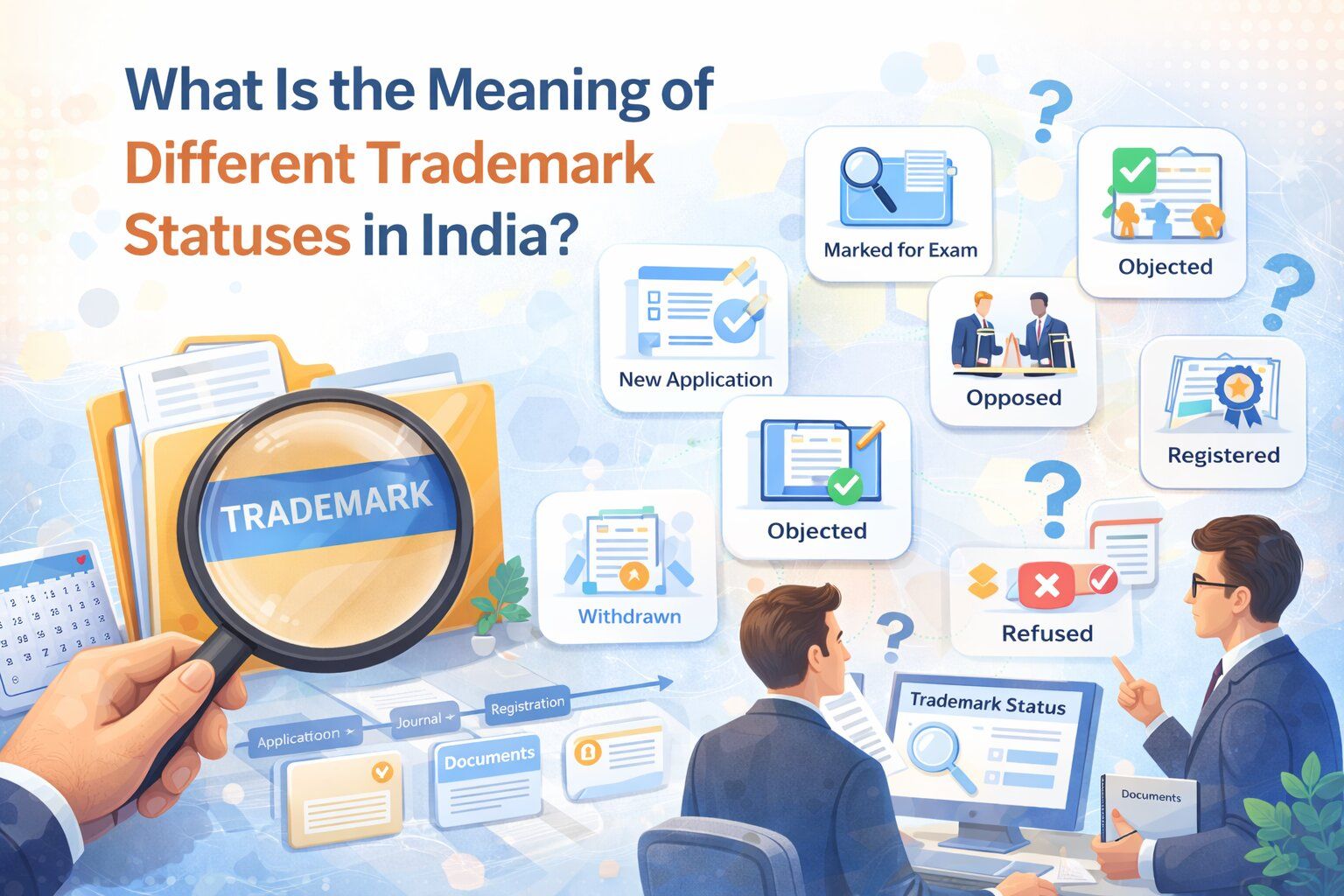
Why Trademark Status Matters
Once a trademark application is filed with the Indian Trademark Registry, it goes through multiple stages before registration. At each stage, the application status changes.
Many applicants panic when they see terms like “Objected” or “Opposed.” However, not every status is negative. Some are simply procedural stages in the examination process.
Understanding each status helps you:
- Track your application progress
- Respond within deadlines
- Avoid unnecessary delays
- Take timely legal action if required
Common Trademark Statuses in India and Their Meaning
1. New Application
This status appears immediately after filing the trademark application.
It means the application has been successfully submitted and is waiting for preliminary processing by the Trademark Registry.
No action is required at this stage.
2. Send to Vienna Codification
This status applies only to logo or device marks that contain graphical elements.
The Vienna Codification system classifies visual elements of trademarks (such as animals, shapes, symbols, etc.) for search purposes.
It is a technical step and does not require any response from the applicant.
3. Formalities Check Pass / Fail
During this stage, the Registry checks whether:
- All required documents are filed
- Government fees are paid
- Applicant details are complete
If the status shows Formalities Check Pass, your application moves forward.
If it shows Formalities Check Fail, you may need to correct documentation or submit missing details.
4. Marked for Exam
This means your application has been assigned to an Examiner for detailed review.
The Examiner will check:
- Similar existing trademarks
- Compliance with legal requirements
- Distinctiveness of the mark
No immediate action is required at this stage.
5. Objected
This is one of the most misunderstood statuses.
“Objected” means the Examiner has raised concerns under the Trademark Act. Common reasons include:
- Similarity with an existing trademark
- Lack of distinctiveness
- Descriptive nature of the mark
An Examination Report is issued, and the applicant must file a reply within the prescribed time (usually 30 days from receipt).
An objection does not mean rejection. It is an opportunity to justify your trademark.
6. Refused
If the Examiner is not satisfied with the reply to the objection, the trademark may be refused.
However, applicants can:
- Request a hearing
- File an appeal
- Challenge the decision legally
Refusal is not always the final step if action is taken promptly.
7. Accepted & Advertised
This is a positive status.
It means the Examiner has accepted the trademark and it has been published in the Trademark Journal.
From this date, a 4-month opposition period begins. During this period, any third party can file an opposition if they believe your mark conflicts with theirs.
8. Opposed
If someone files an opposition during the journal publication period, the status changes to “Opposed.”
This initiates a legal proceeding between:
- The Applicant
- The Opponent
Evidence, counter-statements, and hearings may follow.
Opposition does not automatically mean loss, but it requires proper legal handling.
9. Withdrawn
A trademark application may be withdrawn voluntarily by the applicant.
It can also be treated as withdrawn if the applicant fails to respond within the prescribed deadlines.
10. Registered
This is the final and successful stage.
If no opposition is filed within four months of publication — or if opposition proceedings are decided in your favor — the trademark status becomes Registered.
You will receive a Registration Certificate, and the trademark will be protected for 10 years (renewable indefinitely).
How Long Does It Take for a Trademark to Be Registered in India?
The timeline varies, but generally:
- Filing to Examination: 1–4 months
- Examination to Publication: 3–6 months (if no objection)
- Publication to Registration: 4 months (if no opposition)
If objections or opposition occur, the process may take longer.
When Should You Contact a Trademark Attorney?
You should consult a professional if your status shows:
- Objected
- Refused
- Opposed
These stages involve legal reasoning and deadlines. Incorrect handling may result in permanent loss of rights.
For simple procedural statuses like “New Application” or “Marked for Exam,” no immediate concern is necessary.
Final Thoughts
Trademark status updates are part of the normal registration process in India. Not every status indicates a problem. Understanding what each stage means helps applicants stay informed and respond correctly when required.
Regularly checking your trademark status on the official IP India website ensures you do not miss important deadlines and helps protect your brand effectively.