What Is the Trademark Journal?
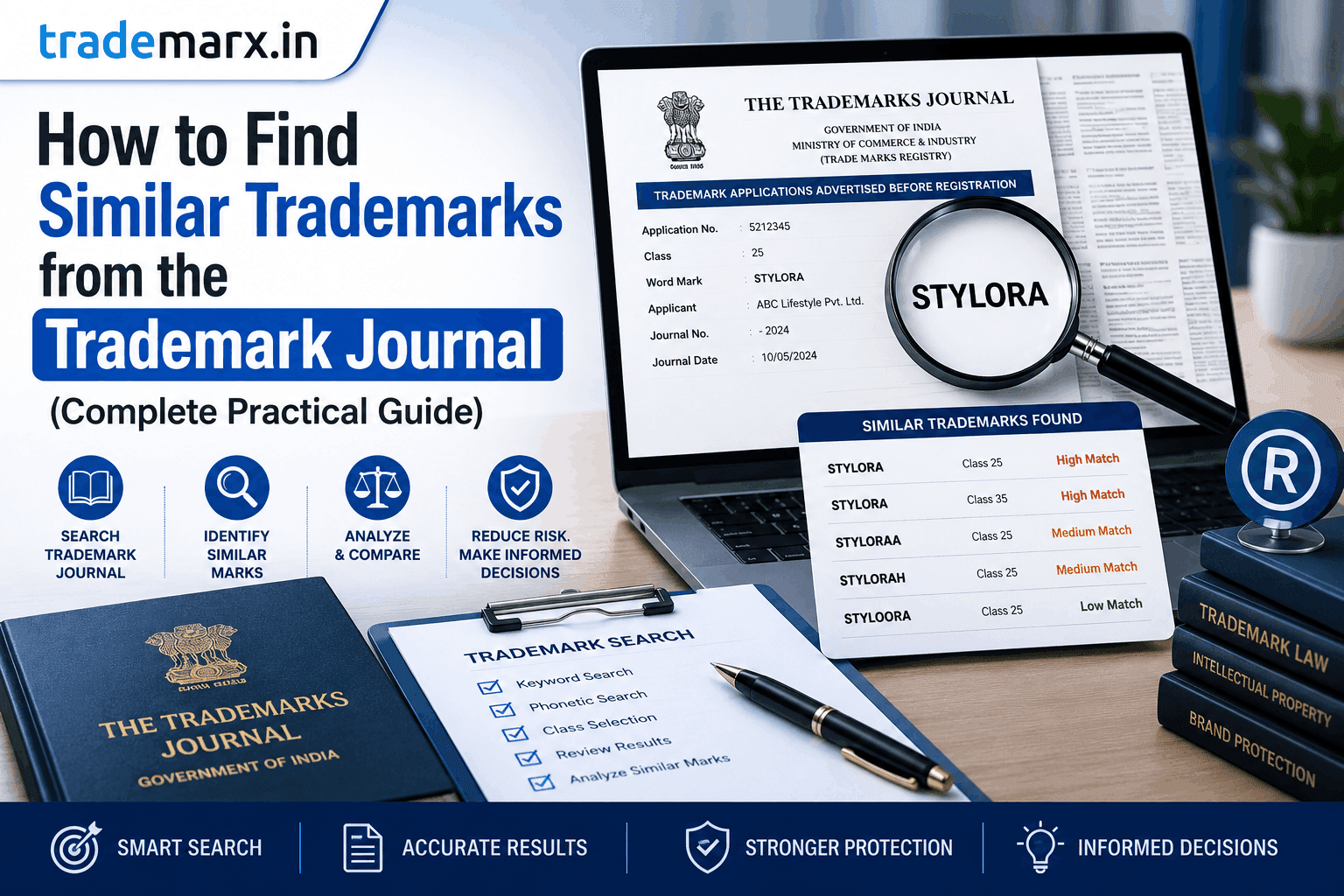
The Trademark Journal is an official weekly publication released by the Trademark Registry of India. It contains all trademarks that have been accepted and advertised before registration.
Once a trademark is published in the journal, it enters the opposition period, typically four months. During this period, any third party who believes the published mark conflicts with their existing mark can file an opposition.
This means that if a similar trademark gets published and you miss it, your brand could face long-term legal complications. Monitoring the journal is therefore not optional for serious brand owners.
Every week, the Indian Trademark Journal publishes 4000+ new trademarks. If you have already filed a trademark, monitoring similar marks in the journal is critical to protect your brand. This guide explains how to find similar trademarks from the Trademark Journal, the real challenges involved, whether journal software tools are worth it, and whether the responsibility lies with the client or the trademark attorney.
Why Finding Similar Trademarks in the Journal Is Important
Many businesses assume that once their trademark application is filed, the job is done. In reality, filing is just the beginning. Every week, thousands of new marks are advertised, and some of them may be deceptively similar to yours in spelling, pronunciation, or visual structure.
If a conflicting trademark proceeds to registration because you failed to oppose it within the deadline, it becomes significantly harder and more expensive to challenge later. Journal monitoring is essentially your early-warning system.
The Real Challenge: 4000+ Trademarks Every Week
On average, a single weekly journal contains approximately 4000 or more trademarks across multiple classes. These marks may include:
- Word marks
- Device/logo marks
- Phonetically similar names
- Slight spelling variations
- Combined word + device marks
Manually reviewing thousands of entries every week is not just time-consuming — it is mentally exhausting. The challenge becomes even greater when you consider:
- Different classes of goods and services
- Similar-sounding names with different spellings
- Marks in regional languages
- Stylized or logo-based marks that resemble your branding
For an individual business owner, scanning such a volume consistently every week is extremely difficult.
Step-by-Step: How to Find Similar Trademarks in the Journal
1. Download the Latest Journal
The Trademark Journal is published weekly on the official IP India website. You need to download the relevant journal file for your class of goods or services.
However, journals are often large PDF files running into thousands of pages.
2. Filter by Class
Trademarks are divided into 45 classes. The first step is identifying which class your trademark falls under.
For example:
- Class 35 – Business services
- Class 44 – Beauty and medical services
- Class 25 – Clothing
Filtering by class reduces the number of entries, but even within one class, there may still be hundreds of marks.
3. Search for Exact and Similar Words
Use keyword search within the PDF to find:
- Exact brand name
- Partial matches
- Phonetic variations
- Common prefixes or suffixes
For example, if your brand is "GlowCare", you should check:
- Glow Kare
- Glocare
- GloCare
- Glow Kar
Phonetic similarity is often more important than exact spelling.
4. Examine Device Marks Carefully
Device marks (logos) require visual inspection. Even if the word differs slightly, the overall visual impression might be confusingly similar.
This is where manual review becomes extremely challenging.
Are Trademark Journal Monitoring Software Tools Worth It?
There are software tools that automate journal monitoring by scanning new publications and generating similarity alerts.
Advantages:
- Saves time
- Faster identification of potential conflicts
- Automated weekly tracking
- Useful for large portfolios
Limitations:
- May generate false positives
- Cannot fully understand contextual similarity
- Often expensive
- May be overkill for small businesses with only 1–2 trademarks
For a company managing dozens or hundreds of trademarks, journal software can be valuable. However, for a small business with one active brand, manual review assisted by a professional attorney is often sufficient and more cost-effective.
In many cases, investing in expensive software may not be justified unless the trademark portfolio is large.
Who Is Responsible for Monitoring the Trademark Journal?
This is a common confusion.
Is it the customer’s responsibility?
Legally speaking, the trademark owner must ensure their rights are protected. However, most business owners do not have the technical knowledge or time to monitor weekly journals consistently.
Or Is It the Trademark Attorney’s Responsibility?
In practice, trademark attorneys or agents usually provide journal monitoring as part of their service or as an additional monitoring package.
Since attorneys understand:
- Legal tests of similarity
- Phonetic comparison standards
- Class-based conflicts
- Risk assessment
They are generally better positioned to evaluate whether a published mark truly conflicts or merely appears similar.
Practical Difficulties Faced During Journal Search
When reviewing 4000+ weekly trademarks, common challenges include:
- Identifying phonetic similarity across different spellings
- Reviewing stylized device marks
- Checking multi-class conflicts
- Avoiding missing similar marks due to oversight
- Maintaining consistency week after week
Even trained professionals rely on structured systems because human error is always possible when handling such volume.
Is Manual Journal Monitoring Still Relevant?
Yes. Despite automation tools, human judgment remains critical.
Software can flag possible similarities, but determining whether a mark is legally conflicting requires experience and understanding of trademark law.
In many situations, a hybrid approach works best:
- Software for filtering
- Human review for final assessment
Final Thoughts
Finding similar trademarks from the Trademark Journal is a critical but often underestimated part of trademark protection. With over 4000 marks published weekly, consistent monitoring is essential to avoid long-term brand conflicts.
Whether done manually or through software tools, journal monitoring should not be ignored after filing your trademark. The opposition window is limited, and missing it can significantly impact your brand protection strategy.
For serious brand owners, journal tracking is not just a procedural step — it is an active defence mechanism.